Blog post
Chiang Mai on a budget: the verified 2026 cost breakdown (nomad edition)
Thailand's arrivals fell 7% in 2025 and are still falling. We ran Chiang Mai through the dataset: verified bands, nomad-village friction, what a day costs.
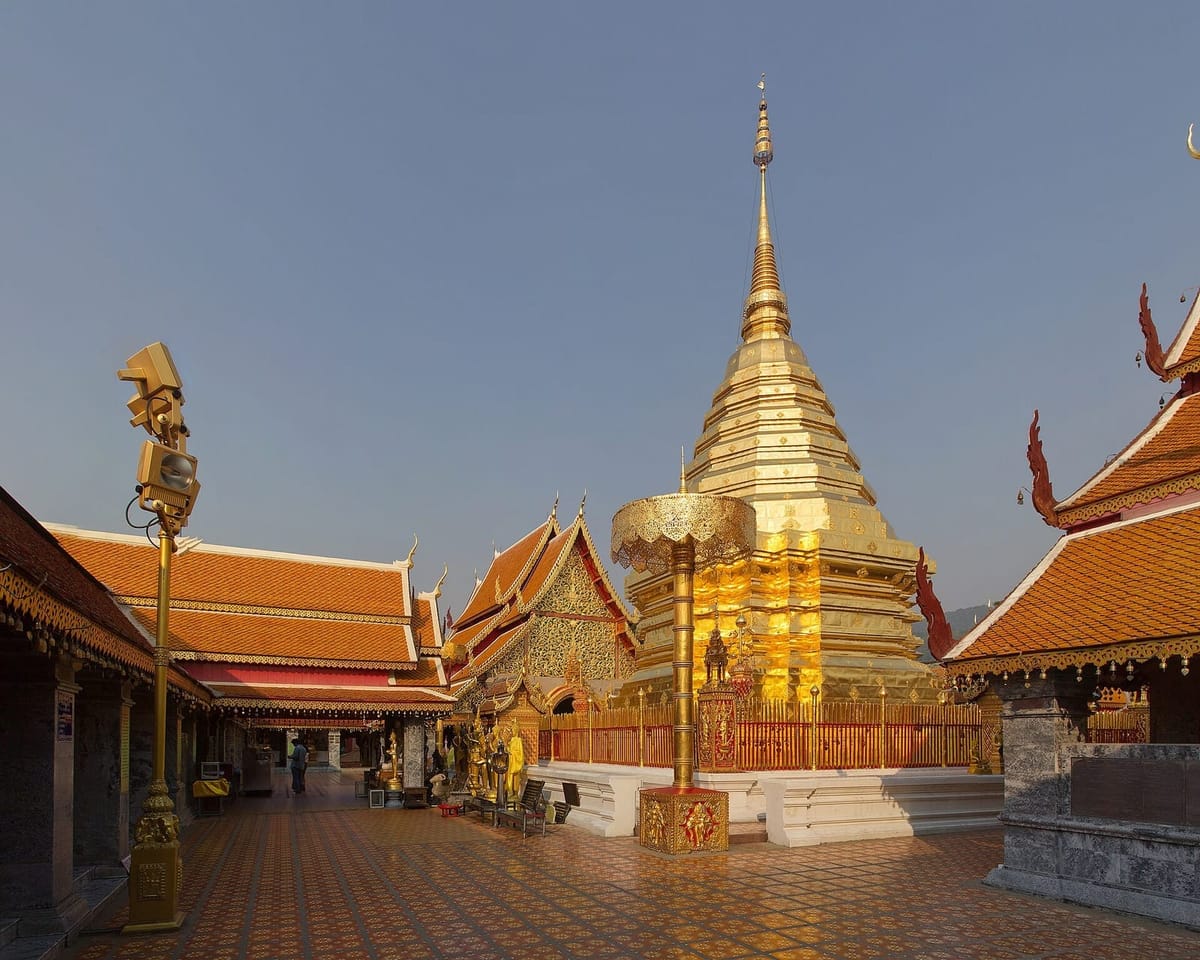
The premise
Every price on this site is dated and sourced, so let’s start with the macro number — and this time it points the other way from our recent breakdowns. Egypt and Morocco are boom-premium stories; Thailand is the opposite: ~32 million foreign arrivals in 2025, down 7.23% year over year (Khaosod English; Thai Examiner, January 2026), and 2026 is running about 3% behind 2025, with 14 million arrivals by early June (Nation Thailand, June and September 2026). The industry’s own association is warning about a “double hit from baht and airfares” (ATTA via Nation Thailand, 7 September 2026), and the government’s response is a proposed $17 tourist fee to fund a tourism upgrade (Straits Times, 30 August 2026 — proposed, not law).
Falling headcount plus a strong baht plus elevated airfares is a specific budget situation: the street-level costs hold, but getting there and staying legal costs more attention than it did. Here’s what the verified numbers say a Chiang Mai day should actually cost.
The verified bands (dataset, September 2026)
| Style | Per day | What it covers |
|---|---|---|
| Budget | ~$25 | Hostel dorm or budget guesthouse, three street-food meals, songthaew/scooter |
| Mid-range | ~$60 | Private condo, restaurant dinners, coworking day passes |
| Luxury | ~$140 | Serviced apartment, island weekends, dinners out nightly |
Those bands anchor on Chiang Mai and come from our cost dataset, built on Numbeo’s Chiang Mai index (data dated September 2026): $554.90/month for one person excluding rent — 54.7% cheaper than Las Vegas. Dorms run from $3.26 with a $19.50 city average (Hostelworld, September 2026). The catch in 2026 isn’t on the ground — it’s in the two verified items above: airfares (ATTA’s warning) and, potentially, a $17 entry fee if the proposal lands. Budget the arrival, not just the day.
Run your own dates and style through the Trip Cost Calculator — it reads the same dataset this post does.
The trend that’s real: nomad-village friction
This one is documented rather than vibes, and it’s the freshest story in the scene: “Chiang Mai district seeks harmony between ‘digital nomads’ and locals” (Nikkei Asia, 6 September 2026). The nomad boom that made Chiang Mai famous is now a municipal negotiation — cafe seats, condo conversions, neighborhood pushback.
The legal backdrop matters for your budget: Thailand is cracking down on illegal daily condo rentals (Bangkok Post, March 2025), and the property-nominee rule space is under active enforcement — 125,622 firms screened in a property crackdown (Nation Thailand, 8 September 2026). Translation for nomads: the cheap “Airbnb monthly” gray market is the part most likely to bite. Book licensed accommodation or negotiate directly with condo buildings on legal terms.
And the health caveat that doubles as a budget item: February–April burning season. In March 2026 Chiang Mai ranked among the top 10 most polluted cities on earth (IQAir, 27 March 2026), with national coverage of the health impact (BBC, 2026). If your feed shows misty temple shots in March, that’s smoke, not mist — plan the north for October–January.
We couldn’t verify any 2026 social metrics (Reddit/TikTok/X blocked this session), so no view counts are quoted. The Nikkei headline is the verifiable core of the “nomads vs locals” trend.
Where the money actually leaks
The dataset’s real-cost block for Thailand is a leak audit. The four big ones:
- The arrival stack. Strong baht, elevated airfares (ATTA, verified), and a proposed $17 tourist fee on top of the (free, official, mandatory) TDAC digital arrival card — never pay a third party for TDAC; the official portal says “No Fees Required” (tdac.immigration.go.th, verified September 2026). The DTV remote-worker visa exists and is evolving (document requirements updated September 2026), but its fee/validity specifics weren’t verifiable this cycle — [inferred]; confirm with the Thai embassy before booking around it.
- The ATM and the exchange desk. The widely reported ~220 THB per-withdrawal ATM fee is [inferred] this cycle. The defense is the same either way: withdraw large and rarely, always decline the machine’s currency conversion.
- The scooter deposit. Shops holding your passport as deposit is standard practice [inferred] — and Nomads.com scores Chiang Mai road safety “Bad” (September 2026). Offer cash, wear the helmet; one ER visit erases a month of budget discipline.
- The island premium. High-season island pricing runs 20–40% above the Chiang Mai baseline [inferred], and Full-Moon weeks distort entire island economies. The disciplined move is in the dataset: Koh Lanta dorms average $12.52 (Hostelworld, verified).
The food math
Street food is where Thailand stops being a mid-range destination. Numbeo’s inexpensive-restaurant meal in Chiang Mai sits at ฿70 (data dated September 2026); local spots run ฿30–60 a dish [anecdotal]. A draft beer is ฿75 and a cappuccino ฿58.60 (Numbeo) — which is why cafe-workspace days cost almost nothing against a Western baseline. Eat where the motorbikes park, not where the menus have photos, and the ~$25/day band holds without heroics.
The stack trace
- ~32M foreign arrivals in 2025, −7.23% y/y; 2026 Jan–Aug −3% y/y, 14M by June [verified]
- ATTA warns of a baht + airfare double hit (Nation Thailand, 7 Sep 2026) [verified]
- $17 tourist fee proposed (Straits Times, 30 Aug 2026) — not yet law [verified, watch it]
- ฿18,239/mo (~$555) single-person baseline excl. rent; meal ฿70 (Numbeo, Sep 2026) [verified]
- Dorms from $3.26, Koh Lanta avg $12.52 (Hostelworld, Sep 2026) [verified]
- TDAC free and mandatory (official portal) [verified]; DTV specifics [inferred — re-verify with the embassy]
- Nomad-village friction is a live municipal story (Nikkei Asia, 6 Sep 2026) [verified headline — pull the full article before quoting details]
The 2026 irony: the boom markets are raising prices while Thailand’s correction is holding them. The floor in Chiang Mai was never crowds — it’s $3 dorm beds, ฿70 lunches, and the deepest nomad infrastructure in Southeast Asia. Skip February–April up north, book legal accommodation, and the cheapest month of your year runs on the verified numbers above.
Full destination guide with the complete connectivity, solo-travel, and money-trap breakdowns: Thailand.
Put the numbers to work
Run a destination through the Trip Cost Calculator, compare options side-by-side, or test yourself on real prices with the Guess the Price game.