Destination guide
Nepal
Nepal · Himalaya, South Asia
The Himalaya's value capital — dal bhat for a few dollars, 8,000m walls on the horizon, and the cheapest high-altitude trekking on earth.
Prices verified September 2026
Plan it with verified data
The local read
Ask a Kathmandu local what visitors get wrong and you get a shrug about the itinerary, not the price. They book Lukla and skip Patan, they pay a trek agency for a guide the checkpoint never asks for, and they eat at the Thamel restaurant with the laminated menu instead of the dal bhat counter two lanes back, where a full thali still costs NPR 300.
Nepal is the cheapest altitude on earth and the most paperwork-ambiguous. The verified anchor is Numbeo’s September 2026 data: a single person in Kathmandu runs about USD 347 a month excluding rent, a cheap meal is NPR 300, and local transport is NPR 30 a ride. A budget day lands near $20 and a comfortable day near $45 — among the cheapest verified bands on this site. What that number hides is the permit stack, the domestic flight, and the altitude tax: everything above 2,000m is cash-only, and every extra day at altitude is a day budgeted for the mountain, not the city.
- Do like a local: eat dal bhat twice a day (refills are free, it’s the trekking fuel), take the tourist bus over the flight when the road is open, buy the SIM at the airport desk, and let altitude set the pace instead of the itinerary.
- Dodge like a local: curbside taxis at KTM arrivals, airport trolley “helpers”, trek agencies selling mandatory-guide packages before you’ve read the rules, and any teahouse whose “free room” comes with a captive menu.
- The honest read: the September 2025 Gen Z protests and the political reset that followed were real, and 2026 travelers describe ordinary travel conditions in Kathmandu and Pokhara [inferred] — but GOV.UK still notes demonstrations and strikes are fairly common and can start at short notice, so check the advisory the week you fly.
Who it’s for
- Trekking budget travelers — the Annapurna and Everest regions deliver world-class walking at teahouse prices.
- Long-stay value seekers — a 90-day visa extendable to 150 days a year, with $20/day cities underneath it.
- Digital nomads with realistic expectations — fast city internet and cheap living, but a thin coworking scene and no nomad-visa shortcut.
- Solo women — widely reported as comfortable, with the standard Thamel nightlife caveats and female-run guesthouses as the easy pick.
- Culture-first travelers — seven UNESCO World Heritage sites inside the Kathmandu Valley at NPR prices.
- Not for: travelers who need predictable infrastructure, card-first payments, or a trek that runs on schedule. Nepal rewards flexibility and punishes plans.
Quick facts
| Fact | Value |
|---|---|
| Best time to go | March–May and October–November for trekking; December–February for cities and low-altitude walking |
| Typical stay | 10–14 days: Kathmandu 3, Pokhara 2, a 5–7 day trek, 1 buffer day for weather |
| Daily budget | ~$20 budget; ~$45 mid-range; ~$120 splurge (dataset, Sep 2026) |
| Money | NPR; USD/NPR reference rate 153.10 buy / 153.70 sell (Nepal Rastra Bank, 19 Sep 2026) |
| Visa | Visa on arrival 15/30/90 days at $25/$40/$100, multiple entry (NTB, verified 18 Sep 2026); extendable to 150 days per visa year |
| Transit | Pathao/InDrive in cities; tourist buses between towns (KTM–Pokhara ~$10–15 [inferred]) |
| Airport to city | Tribhuvan (KTM) to Thamel: app ride NPR 700–1,000, curbside quotes above it [inferred] |
| Trek permit stack | TIMS NPR 2,000 FIT per route (NTB-verified) · ACAP NPR 3,000 · Sagarmatha NPR 3,000 + 13% VAT · Khumbu Pasang Lhamu NPR 2,000 [park fees inferred] |
| Connectivity | Airport tourist SIM ~NPR 1,990 / 28 days [inferred]; strong city Wi-Fi, paid and slow above 2,000m |
| 2026 notes | Political reset after the Sep 2025 Gen Z protests; guide-rule enforcement is disputed and route-dependent — verify before committing to a solo trek |
Before you go
Documents & money
- Visa on arrival at KTM: 15/30/90 days at USD 25/40/100, all multiple entry (NTB schedule, verified 18 Sep 2026) — pay in clean USD cash, as the NTB does not accept credit cards for the visa fee
- Extensions run to a maximum of 150 days per visa year (Jan 1–Dec 31) and overstaying is treated seriously — set a calendar reminder for day 80
- NPR from bank ATMs inside Thamel/Lakeside (per-withdrawal cap NPR 20,000–35,000, ~NPR 500 fee [inferred]); carry cash for anything above 2,000m
- Re-check the USD/NPR rate the week you fly — 153.10 buy / 153.70 sell on 19 Sep 2026
Getting around
- Install Pathao and InDrive before landing — that’s the difference between NPR 800 and NPR 2,500 at arrivals
- Tourist buses (Kathmandu–Pokhara) are the honest middle option: fixed price, daylight departure, ~$10–15 [inferred]
- Domestic flights to Lukla/Pokhara may reroute through Ramechhap (Manthali) in peak season — build a buffer day into any trek start [inferred]
Trek paperwork (the part that fails trips)
- Permits come as a stack: TIMS NPR 2,000 (FIT, per route per entry — mandatory per the Nepal Tourism Board) plus ACAP NPR 3,000 for Annapurna, or Sagarmatha NPR 3,000 + 13% VAT and Khumbu Pasang Lhamu NPR 2,000 for Everest [park fees inferred]
- The 2023 rule requiring a licensed guide for most trekking areas still stands officially; enforcement reports conflict — independent trekkers reported completing the Annapurna Circuit solo in April 2026, while operator posts claim tightening since March 2026. Treat operator claims as marketing, but budget for a guide if your route crosses a strict checkpoint [inferred]
- Carry printed permits and passport copies; checkpoints record them and teahouses ask
Pack & book
- Layers and a sleeping-bag liner: teahouse rooms at 3,000m are cold and blankets are not guaranteed [inferred]
- Book Lukla flights and the first two teahouse nights; leave the rest loose because weather rewrites the plan
- Temple kit: shoulders and knees covered for Boudhanath, Swayambhunath and Pashupatinath
SIM & connectivity: airport tourist SIM around NPR 1,990 / 28 days with passport registration [inferred]; NTC for trekking coverage, Ncell for city speed — full detail in the sidebar’s connectivity block.
Where to stay
| Neighborhood | Vibe | Price | The local’s verdict |
|---|---|---|---|
| Kathmandu — Thamel | Backpacker core, gear shops, bars | Budget–mid | Convenient and loud; every price is negotiable and every scam lives here |
| Kathmandu — Patan (Lalitpur) | Newari courtyards, quiet cafés | Mid | The pick — the same heritage without the Thamel markup |
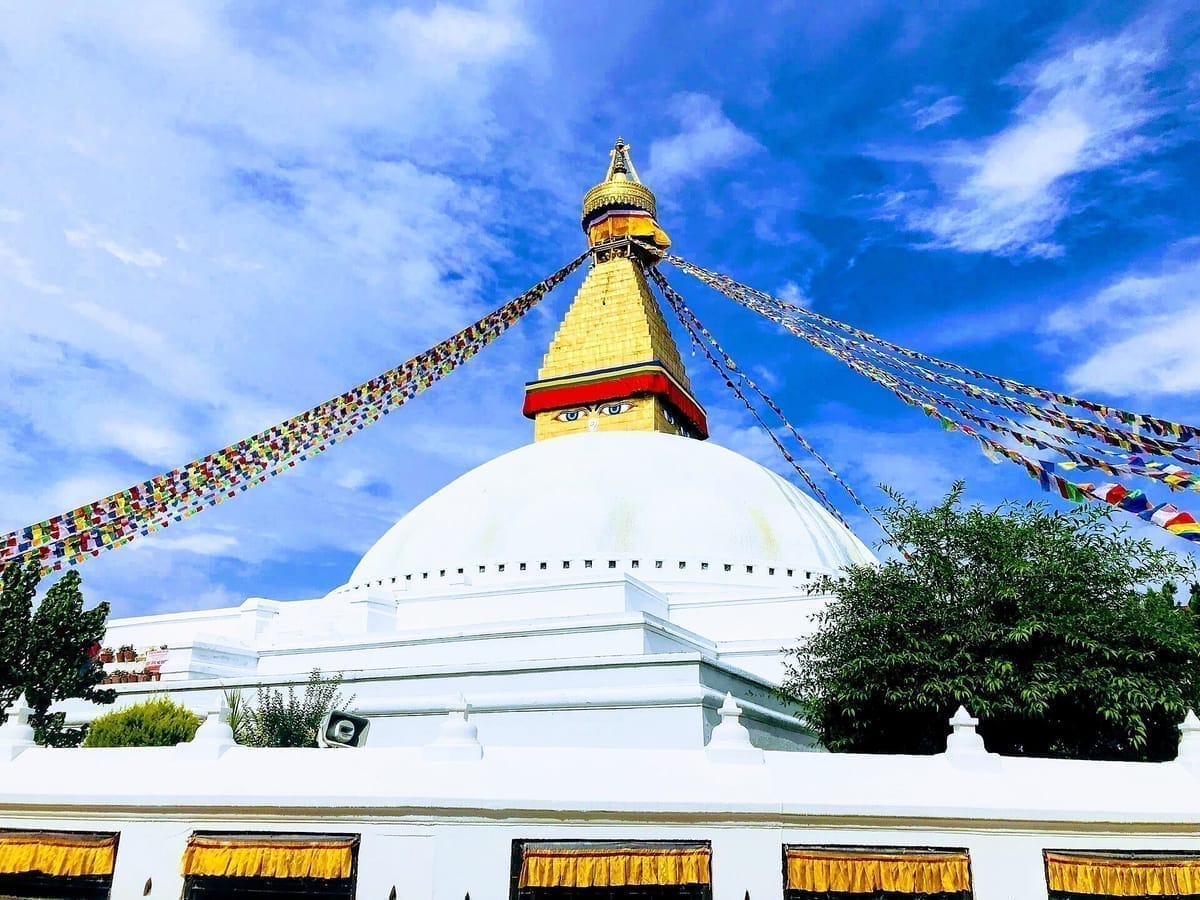
| Kathmandu — Boudhanath | Stupa-side, Tibetan quarter | Mid | The calm, walkable base for a slow week [inferred] |
| Pokhara — Lakeside | Lakefront, trek launches, cafés | Budget–mid | Where you stage Annapurna; busy north end, calmer south |
| Pokhara — Sarangkot / hillside | Machhapuchhre views at dawn | Mid | One splurge night for the sunrise, then move back down |
| Teahouse villages | Trekking lodges, dinner included in practice | Budget | The stay is the trek; the dining room is the evening |
The local pick is Patan over Thamel and Lakeside-south over Lakeside-north — in Kathmandu you get the same courtyards and stupas with fewer touts, and in Pokhara you get the lake without the bar strip. Thamel dorms run NPR 500–1,200 and private rooms NPR 2,000–5,000 [inferred]; teahouse nights above 3,000m climb with altitude and scarcity, not with luxury.
How a local spends 10 days
Day 1 — Kathmandu, orient. Thamel for the SIM and a gear check, walk to Swayambhunath for sunset, dal bhat at a local counter rather than the hotel.
Day 2 — Kathmandu Valley heritage. Boudhanath at dawn (kora with the locals), Pashupatinath mid-morning, then Patan Durbar Square and its museum in the afternoon. Fixed-price tickets, no guide required.
Day 3 — Bhaktapur + Nagarkot. Early bus to Bhaktapur’s car-free old town, then up to Nagarkot for the Himalaya panorama if the sky is clear [inferred].
Day 4 — Tourist bus to Pokhara. Seven hours, daylight, fixed price. Sunset on Lakeside, then book trek permits and TIMS before dinner.
Day 5–9 — Annapurna foothills. Poon Hill (4 days) or the Annapurna Base Camp approach (7–9 days) — Ghandruk’s Gurung village and the rhododendron forest are the value route; ABC is the marquee. Teahouse nights, dal bhat refills, sunrise at Poon Hill.
Plan your trip
At a glance
- Country / region: Nepal, the Himalaya — Kathmandu Valley, Pokhara’s lake basin, the Annapurna and Khumbu trekking regions
- Best time to visit: March–May and October–November for trekking; cities are year-round
- Getting around: Pathao/InDrive in cities, tourist buses between towns, teahouses on foot
- Stay: Patan over Thamel in Kathmandu; Lakeside-south in Pokhara; teahouse villages on trek
- Money: NPR cash-first; ATMs thin out fast above 2,000m; USD cash for the visa on arrival
Best time to go
- October–November: the clearest mountain views of the year, stable trails, busiest teahouses — book the first nights.
- March–May: rhododendron forests in bloom and warm trekking days; haze builds by late April [inferred].
- December–February: cold, quiet and cheap in the cities and lower hills; high passes and many teahouses close [inferred].
- Skip: June–September monsoon — GOV.UK confirms flooding and landslides that block roads, and the mountains disappear behind cloud.
How many days
- 7 days: Kathmandu Valley (3) + Pokhara (2) + a Poon Hill loop (4) is the minimum honest version.
- 10–14 days: add Bhaktapur, Nagarkot and either Annapurna Base Camp or a Langtang valley trek.
- 21+ days: Everest region (Lukla, Namche, Tengboche, or EBC with acclimatization days) — the altitude, not the distance, sets the calendar.
Getting there
- Flights: Tribhuvan International (KTM) is the only real gateway; connections via Delhi, Doha, Dubai, Istanbul or Kuala Lumpur. Pokhara (PKR) takes domestic hops from KTM [inferred].
- Overland: crossings from India (Sunali/Belahiya, Raxaul) are straightforward and slow; the Tibetan border is closed to independent travelers [inferred].
- Domestic: Buddha Air and Yeti fly KTM–Pokhara in about 25 minutes; Lukla flights are weather-cancelled often enough that a buffer day is standard practice [inferred].
Cost guide
- Budget — ~$20/day — guesthouse or dorm, dal bhat twice a day, local buses, stupas and Durbar Square tickets bought individually.
- Mid-range — ~$45/day — private rooms in Patan or Lakeside, restaurant meals, tourist buses, a permit stack amortized over the trip.
- Splurge — ~$120/day — boutique heritage hotels in Kathmandu, a private porter-guide, and domestic flights instead of the bus.
- The trek is the real budget line: permits, gear rental and higher-altitude teahouse rates all land in the same week [inferred].
- Run the numbers for your own trip with the Trip Cost Calculator — destination, length, and style in, a real day-rate out.
Food & drink
Nepali food is built for walking: rice, lentils and refills, priced for locals and still priced for you.
- Budget: dal bhat (NPR 300 in Kathmandu per Numbeo, free refills), momos by the plate, sel roti and chiya from street stalls.
- Mid-range: Newari khaja sets in Patan, thukpa and Tibetan bread in Boudhanath, tandoori and Indian thalis almost anywhere.
- Trek food: dal bhat is the fuel; the menu gets shorter and the prices higher as you climb, and every teahouse expects you to eat where you sleep.
- The move: drink boiled or filtered water (or carry a filter bottle) — bottled water above 2,000m is both expensive and a waste problem [inferred].
Safety
Nepal’s serious-crime rate against visitors is low, and the practical risks are specific rather than ambient. GOV.UK flags pickpocketing in Thamel, Sanepa and Kupondol, a drink-spiking and sexual-assault warning around nightlife, demonstrations and strikes that can start at short notice, and monsoon flooding and landslides from June to October. On trek the real hazards are altitude sickness (ascend slowly, take the acclimatization day), weather-cancelled flights, and cash-only villages above 2,000m. Earthquakes are a background risk the whole country plans around. Emergency numbers are 100 for police and 102 for an ambulance [inferred]; register your trek with your embassy and buy insurance that explicitly covers high-altitude trekking. For the cost and planning numbers behind this guide, see the Trekking Nepal in 2026: real per-day costs, verified permits, and the guide rule nobody agrees on.
FAQ
How many days do you need in Nepal?
10–14 days is the honest first trip: three days in the Kathmandu Valley, two in Pokhara, and a five-to-seven-day trek with a weather buffer day. Seven days works only if you cut either the trek or the valley. Three weeks is what the Everest region actually requires once acclimatization days are included — altitude, not distance, is the constraint.
Sources: dataset transport notes · Numbeo Kathmandu/Pokhara (Sep 2026)
Do you need a guide to trek in Nepal in 2026?
The 2023 rule requiring a licensed guide for most trekking areas still stands officially, and the Nepal Tourism Board states the TIMS card is mandatory to trek (NPR 2,000 for an individual, per route). Enforcement reports conflict: independent trekkers reported completing the Annapurna Circuit solo in April 2026 without checkpoint problems, while trekking-operator posts since March 2026 claim enforcement tightened — and operators have an obvious commercial interest in that claim. The Everest region also runs its own local permit regime (Khumbu Pasang Lhamu entry). Practical advice: buy TIMS and the park permits, plan a route where you meet other trekkers, and confirm the guide requirement with the Nepal Tourism Board or your embassy before committing to a solo itinerary [inferred].
Sources: Nepal Tourism Board Permits/Fees (verified 18 Sep 2026) · GOV.UK Nepal entry requirements (Sep 2026) · traveler reports 2026 [inferred]
Is Nepal safe to visit after the 2025 protests?
The September 2025 Gen Z protests led to a change of government, and by 2026 travelers describe ordinary, calm travel conditions in Kathmandu and Pokhara [inferred]. GOV.UK's standing caution remains: protests, demonstrations and strikes are fairly common, can start at short notice, and can disrupt transport or prompt curfews. That's a check-the-advisory-the-week-you-fly situation, not a reason to cancel — the country's tourism infrastructure is running normally.
Sources: GOV.UK Nepal safety and security (verified 19 Sep 2026) · 2026 traveler reports [inferred]
Cash or card in Nepal?
Cash, and specifically NPR. Cards work in Thamel and Lakeside hotels and in bigger restaurants, and GOV.UK is direct that ATMs are not reliable outside main tourist sites — which means every trekking village above 2,000m is cash-only. Withdrawals are capped per transaction (commonly NPR 20,000–35,000) with a fee near NPR 500 [inferred], so take larger amounts in the city, carry small notes for teahouses, and keep USD cash for the visa on arrival — the Nepal Tourism Board does not accept credit cards for the visa fee.
Sources: GOV.UK Nepal entry requirements (Sep 2026) · Nepal Tourism Board visa schedule (verified 18 Sep 2026) · Nepal Rastra Bank rate 19 Sep 2026 · ATM fees [inferred]
How much does a Nepal trek cost in 2026?
Every trek starts with the TIMS card at NPR 2,000 (individual, per route per entry — mandatory per the Nepal Tourism Board), then ACAP NPR 3,000 for the Annapurna region [inferred] or Sagarmatha National Park NPR 3,000 + 13% VAT plus the Khumbu Pasang Lhamu entry at NPR 2,000 for Everest [inferred]. Then it's teahouse nights and food: budget roughly $25–40 per trekking day in the Annapurna foothills and more as you climb, or $80–120/day all-in for a guided, portered teahouse trek [inferred]. The cheap part is that you stop paying for transport once you're walking.
Sources: permit figures from operator sources (official portals unreachable) [inferred] · dataset notes Sep 2026
When is the best time to visit Nepal?
October–November is the single best window: post-monsoon air is the clearest of the year and trails are stable. March–May is the second window, with rhododendrons in bloom and warmer days. December–February is cold, cheap and quiet in the cities and lower hills. June–September monsoon is the one to skip for trekking — GOV.UK confirms flooding and landslides that block roads — though Kathmandu and Pokhara remain perfectly visitable if you accept daily rain.
Sources: GOV.UK Nepal safety and security (monsoon hazard, verified 19 Sep 2026) · trekking season [inferred]
The real cost: money traps to know
The costs that don't show up in the brochure — and the ones that quietly eat a budget.
- Taxes & feesThe visa is the gate, not the tax: 15/30/90 days on arrival at USD 25/40/100, all multiple entry (Nepal Tourism Board schedule, verified 18 Sep 2026). The NTB states credit cards are not accepted for the visa fee, and gov.uk advises USD cash as the back-up — bring clean bills. Trekking adds TIMS at NPR 2,000 per route (NTB-verified) plus park permits (ACAP NPR 3,000; Sagarmatha NPR 3,000 + 13% VAT; Khumbu Pasang Lhamu NPR 2,000) [inferred]. Menus and hotel rates are normally quoted all-in.
- ATM & cashNepali ATMs cap per-transaction withdrawals (commonly NPR 20,000–35,000) and add roughly NPR 500 per foreign withdrawal [inferred]. GOV.UK is blunt about the rest: ATMs are not reliable outside main tourist sites — carry NPR in cash above 2,000m.
- Hidden feesAirport 'helpers' who grab your trolley and then invoice you; taxi touts quoting per-person instead of per-car; teahouses offering a 'free' room priced back through the menu; trek agencies selling mandatory-guide packages. All avoidable by agreeing the number first [inferred].
- Taxis & transportKathmandu airport to Thamel: book Pathao or InDrive and pay NPR 700–1,000, or accept whatever the curbside quote says [inferred]. Local buses NPR 20–30, tourist bus Kathmandu–Pokhara ~$10–15, domestic flight KTM–PKR ~$90–120 [inferred]. Apps over street taxis, always.
- Budget bufferAdd 15% — permit stacks, altitude-driven itinerary changes, and cash-only villages all land mid-trip.
For solo female travelers
- SafetySerious crime against visitors is low, but GOV.UK explicitly flags sexual assault, drink-spiking and pickpocketing in Thamel, Sanepa and Kupondol. The working read: safe with ordinary city sense — never leave a drink unattended in Thamel.
- At nightThamel and Pokhara's Lakeside stay busy and lit; trekking villages go dark after dinner and the dining room becomes the social life — that's the norm, not a risk.
- Dress & cultureCovered shoulders and knees make stupa and temple entry (Boudhanath, Swayambhunath, Pashupatinath) smooth; on trek, practical layers are completely unremarkable.
- Where to stayFemale-run guesthouses and women-only dorms are common in Thamel and Lakeside, and solo women consistently report teahouse trekking as comfortable — pick a teahouse with other trekkers rather than an empty one [inferred].
Connectivity & remote work
- SIM / eSIMAirport tourist SIMs run about NPR 1,990 for 28 days of tourist-plan data [inferred, traveler-reported]; passport registration is mandatory. NTC (Nepal Telecom) for coverage in trekking regions, Ncell for city speed. Skip data-only SIMs — you want voice for teahouse bookings.
- Wi-FiKathmandu and Pokhara are genuinely well connected — city ISPs deliver 100 Mbps-class speeds and 2026 power cuts are rare, with inverters covering the rest [inferred]. Trekking-region Wi-Fi is paid, slow, and worth treating as a luxury rather than a tool.
- CoworkingThamel, Jhamsikhel and Lakeside run desks at roughly $5–10/day or $80–150/month [inferred]; Pokhara's formal inventory is thin, so café-hopping is the honest working mode. Treat Nepal as a value base, not a Bali-grade nomad hub.
- Nomad visaNo verified digital-nomad visa — no official source confirms one [inferred]. The practical route is a 90-day tourist visa extended up to 150 days per calendar year, which covers most working seasons.
Sources & verification
Every price on this page was checked against these sources — last verified September 2026.
- GOV.UK Nepal entry requirements — visa on arrival tiers, extensions to 150 days/year, cash-first at the visa counter (verified 19 Sep 2026)
- GOV.UK Nepal safety and security — protests, pickpocketing areas, monsoon hazards, drink-spiking warning (verified 19 Sep 2026)
- Numbeo Kathmandu Cost of Living — meal, transport and rent lines, updated 18 Sep 2026 (974 entries / 71 contributors)
- Numbeo Pokhara Cost of Living — updated 18 Sep 2026 (85 entries / 6 contributors, low-confidence flag)
- Nepal Rastra Bank — official USD/NPR reference rate, 19 Sep 2026 (buy 153.10 / sell 153.70)
- Nepal Tourism Board — official tourist visa fee schedule: 15 days USD 25 / 30 days USD 40 / 90 days USD 100, all multiple entry; credit card not accepted for visa fees; maximum 150 days per visa year (verified 18 Sep 2026)
- Nepal Tourism Board — Permits/Fees: TIMS Card is mandatory to trek, FIT NPR 2,000 per route per person per entry (group NPR 1,000; SAARC FIT NPR 600); restricted-area permits via the Department of Immigration (verified 18 Sep 2026)
- [inferred] Park-level permit figures (ACAP NPR 3,000; Sagarmatha NPR 3,000 + 13% VAT; Khumbu Pasang Lhamu NPR 2,000) and the ~USD 3/day visa-extension rate — NTB's protected-area schedule was not reachable as a direct fee table at verification time; re-verify on the ground
Planning this trip?
Run Nepal through the Trip Cost Calculator — destination, length, and travel style in, a real day-rate out.
Open the Trip Cost CalculatorFollow the receipts
New verified costs land in the feed as they're checked — subscribe in your reader, no email required.